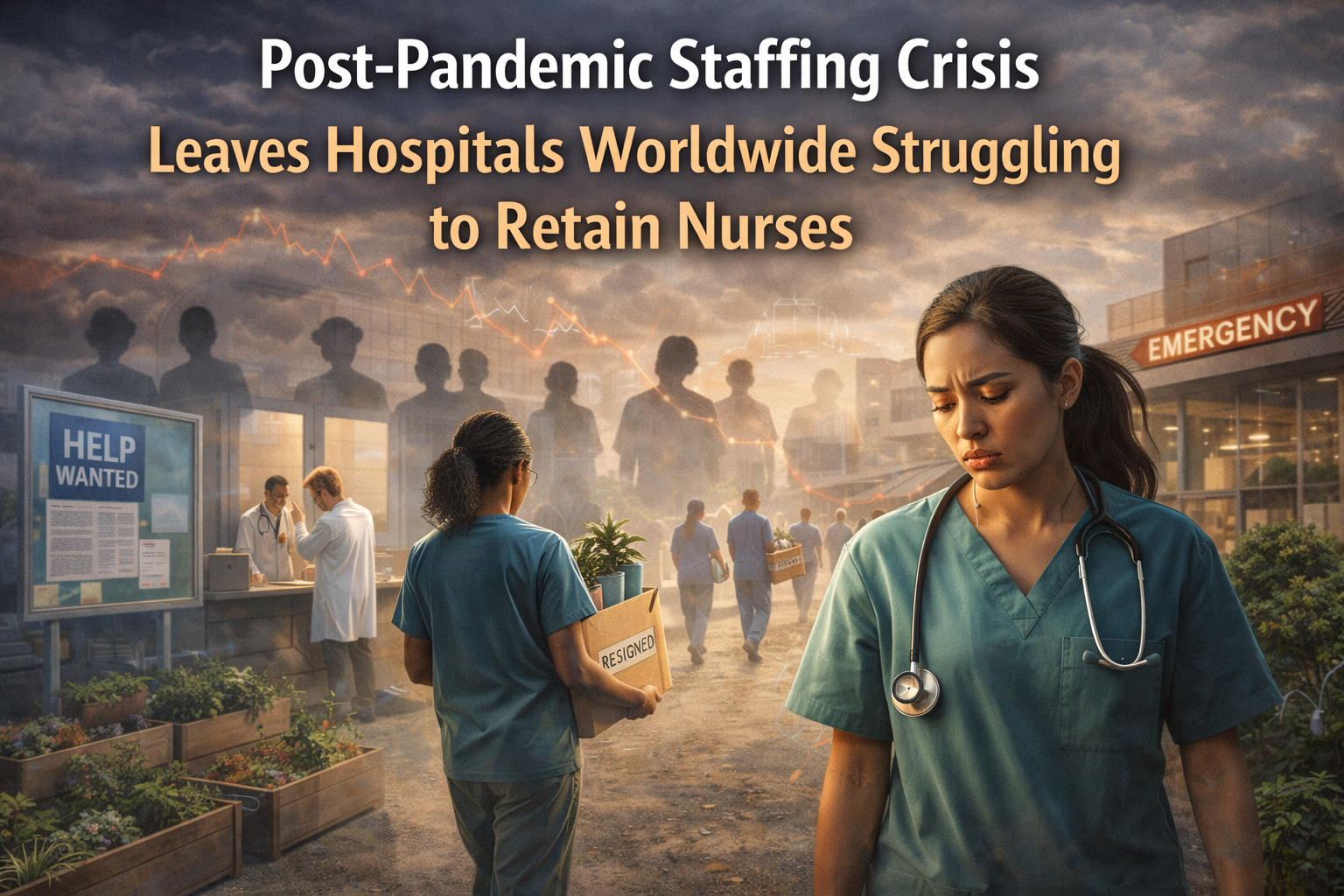
The Exodus at the Bedside
The pandemic may have faded from daily headlines, but its most damaging legacy continues to haunt hospitals across the globe. A massive wave of nurse attrition — driven by burnout, trauma, inadequate compensation, and shifting professional expectations — has left healthcare systems on every continent scrambling to fill critical vacancies. The applause and candlelight vigils that once celebrated frontline healthcare workers have given way to a quieter, more troubling reality: nurses are leaving the profession in historic numbers, and hospitals are struggling to bring them back.
The scale of the crisis is staggering. The World Health Organization estimates a global shortfall of approximately 5.9 million nurses, a deficit that existed before the pandemic but has since accelerated dramatically. In wealthy nations and developing countries alike, hospital administrators report vacancy rates that compromise patient safety, extend wait times, and push remaining staff to the brink of collapse. What began as an emergency workforce challenge during the pandemic has hardened into a structural crisis that threatens the foundation of modern healthcare delivery.
The Burnout Epidemic
At the heart of the nursing exodus lies an epidemic of burnout that the pandemic ignited and institutional inaction has failed to extinguish. For nearly three years, nurses worked punishing hours under extraordinary conditions — caring for critically ill patients in overcrowded wards, witnessing unprecedented volumes of death, improvising with inadequate protective equipment, and absorbing the emotional weight of families who could not be at their loved ones’ bedsides. Many contracted the virus themselves. Some lost colleagues. Almost all carried psychological scars.
When the acute phase of the crisis subsided, the relief that many nurses expected never arrived. Staffing levels remained dangerously low, meaning those who stayed inherited even heavier workloads. Mandatory overtime became routine rather than exceptional. The emotional toll of the pandemic compounded into clinical depression, anxiety disorders, post-traumatic stress, and a pervasive sense of moral injury — the feeling of being unable to provide the standard of care that patients deserve despite one’s best efforts.
Surveys conducted across the United States, the United Kingdom, Canada, Australia, and several European nations consistently reveal that between 20 and 40 percent of nurses have considered leaving the profession since the pandemic began. Among younger nurses with fewer than five years of experience, the numbers are even higher. The profession that once symbolized lifelong vocation is increasingly viewed as unsustainable.
Compensation That Does Not Match the Cost
While burnout drives nurses away emotionally, inadequate compensation drives them away practically. Despite the extraordinary demands placed on them, nursing salaries in many countries have failed to keep pace with inflation, rising living costs, and the financial rewards available in competing fields. A registered nurse with years of training and clinical expertise may earn less than professionals in technology, finance, or corporate sectors who face a fraction of the physical and emotional strain.
The pandemic briefly created upward pressure on wages as hospitals offered crisis bonuses and hazard pay to retain staff. However, many of these incentives proved temporary. When the bonuses disappeared, nurses found themselves back at pre-pandemic pay scales while still shouldering post-pandemic workloads. The perceived betrayal — being called heroes during the crisis and treated as expendable afterward — has fueled deep resentment across the profession.
Travel nursing, which offers significantly higher pay for temporary assignments, has further destabilized hospital staffing models. Experienced nurses increasingly leave permanent positions to work as travel nurses, earning two or three times their previous salaries while enjoying greater schedule flexibility. Hospitals, in turn, spend enormous sums hiring temporary staff at premium rates — money that might otherwise fund permanent salary increases, better staffing ratios, or improved working conditions.
The Ripple Effects on Patient Care
The consequences of the nursing shortage extend far beyond administrative inconvenience. Research consistently links inadequate nurse staffing to measurable declines in patient outcomes. Higher nurse-to-patient ratios are associated with increased rates of medical errors, hospital-acquired infections, patient falls, medication mishaps, and preventable mortality. When nurses are stretched too thin, the quality of observation, communication, and clinical judgment that defines excellent bedside care inevitably deteriorates.
Emergency departments bear a particularly heavy burden. Overcrowded and understaffed, emergency rooms in cities across North America, Europe, and Australasia report patients waiting hours — sometimes days — for admission to inpatient wards. Ambulance diversions, where emergency vehicles bypass the nearest hospital because it lacks capacity, have become routine events rather than rare exceptions.
The crisis also creates a vicious cycle. As conditions worsen due to short staffing, more nurses leave, which worsens conditions further, which drives still more departures. Hospital administrators describe a downward spiral that is extraordinarily difficult to reverse once it gains momentum. Remaining nurses absorb the growing burden, their own burnout deepening with each additional shift worked short-staffed.
Global Dimensions of a Universal Problem
The nursing crisis respects no borders. In sub-Saharan Africa, where the pre-pandemic nurse-to-population ratio was already critically low, the loss of even small numbers of trained professionals to emigration or career change creates devastating gaps in care delivery. Countries like Nigeria, Kenya, and Ghana watch helplessly as their best-trained nurses are recruited by wealthier nations offering salaries and working conditions that local health systems simply cannot match.
In Southeast Asia, nations like the Philippines — historically one of the world’s largest exporters of nursing talent — face their own domestic shortages as international demand intensifies. The paradox is cruel: countries that train nurses for global consumption find their own hospitals understaffed, their own populations underserved.
Even wealthy nations with robust healthcare budgets are not immune. Japan’s aging population demands ever-increasing nursing care, yet cultural and immigration barriers limit workforce expansion. Germany has actively recruited nurses from abroad but faces integration challenges and regulatory hurdles. The United Kingdom’s post-Brexit immigration landscape has complicated its traditional reliance on internationally trained nursing staff.
Building a Sustainable Future for Nursing
Addressing the crisis demands more than recruitment campaigns and signing bonuses. Systemic change is required across multiple dimensions. Competitive, permanent salary increases must reflect the true value and complexity of nursing work. Safe staffing ratios, enshrined in policy rather than left to administrative discretion, must protect both patients and professionals from the dangers of overwork.
Mental health support must become embedded in healthcare workplace culture. Hospitals that provide accessible counseling, peer support programs, flexible scheduling, and genuine pathways for professional growth will retain nurses more effectively than those relying solely on financial incentives. Addressing the root causes of moral injury — inadequate resources, bureaucratic overload, and the erosion of professional autonomy — is essential to restoring nurses’ sense of purpose and pride.
Education pipelines must also expand. Nursing schools in many countries turn away qualified applicants due to insufficient faculty, clinical placement sites, and funding. Investing in nursing education infrastructure is a prerequisite for any long-term workforce solution.
A Debt Unpaid
The world owes an enormous debt to the nurses who carried healthcare systems through their darkest modern chapter. That debt cannot be repaid with applause alone. It demands structural investment, cultural transformation, and a genuine commitment to making nursing a profession that talented, compassionate people choose to enter and choose to stay in. Until hospitals worldwide take that commitment seriously, the staffing crisis will continue — and patients will continue to pay the price.


Be First to Comment